
Microsoft Windows 95
1995, July 14
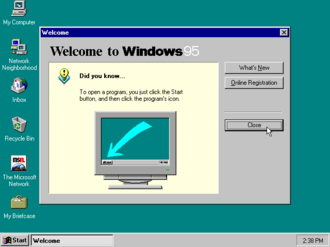
Windows 95 is a consumer-oriented operating system developed by Microsoft, released to manufacturing on July 14, 1995, and to retail on August 24, 1995. The first of the Windows 9x line of operating systems, Windows 95, which replaced Windows 3.1, merged Microsoft's MS-DOS operating system and Microsoft Windows graphical user shell into a single product, removing the requirement to install Windows on top of a separate copy of MS-DOS, and featured major changes to the core components of the operating system, such as moving from the mainly cooperatively multitasked 16-bit architecture of its predecessor to a 32-bit preemptive multitasking architecture.
Windows 95 featured a new graphical user interface (GUI), introducing the Windows Explorer file manager, a taskbar with the Start menu and a notification area, and file shortcuts on the desktop, and implemented a number of improvements over its predecessor, including Plug-and-Play driver integration, native Internet integration, and support for longer filenames (from 8 to 255 characters). Accompanied by an extensive marketing campaign that generated much prerelease hype, it was a major success and is regarded as one of the most significant products in the personal computing industry. Three years after its introduction, Windows 95 was followed by Windows 98. Microsoft ended mainstream support for Windows 95 on December 31, 2000, with extended support lasting until December 31, 2001, the same date the contemporary Windows NT 3.51 and all previous versions of Windows also reached end-of-life.